
Asgardian Rising RTP: Slot Odds, Payout Percentage, Bonus Features, and What to Expect From the Game's Returns
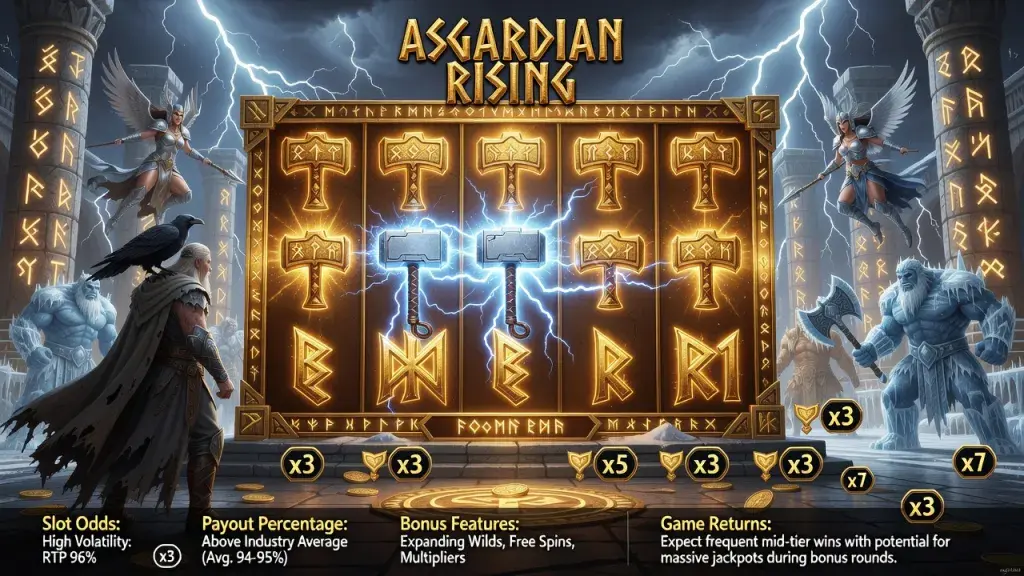
Authored by metapayglobal.io, 18-07-2026
A single percentage point in return-to-player math can shift a slot's long-term payout by thousands of dollars over a large enough sample of spins. That's the reality behind every mythology-themed release fighting for attention in a crowded market, and Asgardian Rising is no exception. Behind the hammer strikes, rune symbols, and Norse iconography sits a mathematical model that determines exactly how much of every wagered dollar theoretically returns to players over time.
Most players click into a new slot chasing the visuals or the bonus round teaser clips, then wonder later why their bankroll behaved the way it did. Understanding Asgardian Rising RTP before you commit real money changes that dynamic entirely. The developers have published figures that place this title within a specific competitive bracket, and reviewing the full breakdown of asgardian rising rtp data gives you a clearer picture of what the game is actually built to deliver. That number alone won't tell you everything, though - volatility, hit frequency, and bonus mechanics all interact with the base RTP to shape your actual experience at the reels.
This piece breaks down every layer of that math: the core percentage, how it compares to genre norms, what drives variance in short sessions, and how the bonus features alter your realistic odds.
Understanding RTP and Why It Matters for Asgardian Rising
Return to player is a theoretical figure calculated over millions of simulated spins, not a promise about any single session. It tells you the percentage of total wagers a slot is designed to pay back over its full mathematical lifecycle. A game with 96% RTP returns 96 cents for every dollar wagered - on average, across an enormous volume of play, not within your next twenty spins.
What RTP Actually Represents
RTP is a design specification, not a live tracker. Developers build the paytable, symbol weighting, and bonus trigger frequency to converge on a target percentage after extensive simulation. Regulators verify these figures before certification, which is why published Asgardian Rising RTP numbers can be trusted as accurate representations of the underlying math rather than marketing estimates.
Why a Single Percentage Doesn't Tell the Whole Story
Two slots can share an identical 96% RTP and feel completely different to play. One might pay small wins constantly with a low ceiling, while the other pays rarely but with explosive multipliers. RTP tells you the destination over the long run; it says nothing about the route, which is why volatility and hit frequency deserve equal attention.
How RTP Connects to House Edge
The inverse of RTP is the house edge - the percentage the operator retains structurally. A 96% RTP slot carries a 4% house edge. This isn't a fee taken from each spin; it's the mathematical outcome of the odds built into every symbol combination and paytable entry.
Asgardian Rising Slot RTP: The Numbers Explained
The published Asgardian Rising slot RTP sits within the range typical of modern mythology-themed video slots, generally clustering in the mid-to-high 95% to 96% bracket depending on the operator configuration. Some studios release multiple RTP variants of the same game for different jurisdictions or platforms, so confirming the exact figure listed at your chosen casino remains a practical step before playing.
Base Game RTP Versus Total RTP
The RTP figure you see quoted usually represents the total contribution across both the base game and bonus rounds combined. Base spins alone typically contribute a smaller share of the overall return, while free spin rounds, multipliers, and special features carry disproportionate weight in the total calculation.
How This Compares to Industry Averages
Slot RTPs across the broader online casino industry commonly range from 92% to 98%. Asgardian Rising positions itself comfortably within the upper-middle segment of that spectrum, putting it ahead of budget or older-generation titles while trailing the small subset of ultra-high-RTP releases that some studios use as loss-leaders.
- Typical low-end slot RTP: 92%-94%
- Industry standard range: 95%-96.5%
- High-RTP outlier titles: 97%-98%
Why Operators Sometimes Offer Different RTP Versions
Licensing agreements occasionally permit studios to configure adjustable RTP tiers for different markets. Always check the paytable or information screen within the game itself, since the number displayed there reflects the exact configuration running at that specific casino.
Asgardian Rising Game Odds: What Players Are Really Up Against
RTP describes long-term return, but Asgardian Rising game odds describe your practical chances within a session - the probability of landing winning combinations, triggering bonus rounds, or hitting the higher-paying symbols on any given spin. These odds are shaped by reel weighting, symbol distribution, and the number of paylines active.
Symbol Weighting and Combination Probability
Higher-value symbols like the primary mythological figures are deliberately weighted to appear less frequently than lower-tier card symbols. This weighting keeps the payout curve balanced: rare high-value hits deliver larger rewards while frequent low-value hits maintain a steady rhythm of smaller wins that keep sessions engaging.
Volatility and What It Means for Your Sessions
Volatility measures how much payout results swing around the RTP average. A medium-to-high volatility profile, which fits the general design pattern of this title, means longer stretches without significant wins interrupted by occasional larger payouts, rather than a steady drip of small returns.
Hit Frequency in Practical Terms
Hit frequency indicates how often a spin returns any payout at all, regardless of size. A slot with 25% hit frequency pays something on roughly one in four spins. Lower hit frequency combined with higher volatility generally signals bigger potential wins spaced further apart - a pattern worth planning your bankroll around before you start.
Asgardian Rising Payout Percentage in Real Play Scenarios
Theoretical math and lived experience diverge constantly in slot play, and understanding that gap is where real strategic value lives. The Asgardian Rising payout percentage guarantees nothing about your next fifty spins - it's a statistical average that only becomes meaningful across thousands of rounds.
Short Session Variance Explained
Play 100 spins and your results could land well above or below the theoretical RTP purely due to randomness. This is standard statistical variance, not evidence that the game is misconfigured. The published payout percentage becomes reliable only as sample size grows into the thousands.
Bankroll Management Around Payout Expectations
Knowing the payout percentage helps set realistic session budgets. If a slot returns 96% theoretically, a $100 session should be approached expecting fluctuation, not a guaranteed $96 return. Setting stop-loss and win-target thresholds before playing keeps decisions grounded rather than emotional.
Comparing Payout Percentage Across Similar Titles
When placed against other mythology-themed slots in the same volatility class, Asgardian Rising's payout percentage holds its own without standing out as exceptional in either direction. This makes it a reasonably balanced choice for players who want competitive returns without the extreme swings of high-variance specialty titles.
Asgardian Rising Bonus Features RTP Breakdown
Bonus rounds don't just add entertainment value - they carry a measurable share of the game's total return contribution. Understanding Asgardian Rising bonus features RTP clarifies why triggering these rounds matters more than casual observation might suggest.
Free Spins Round Contribution
Free spin rounds typically apply multipliers or expanded symbol sets that significantly outperform base game returns per spin. In many mythology-themed slots of this design class, free spins alone can account for a third or more of the total theoretical RTP, making bonus trigger frequency a critical factor in overall value.
Wild Symbols, Multipliers, and Expanding Features
Special symbols that expand across reels or stack multipliers during bonus rounds disproportionately affect payout size once triggered. These features are engineered specifically to concentrate value into fewer, larger events rather than spreading it evenly - a hallmark of medium-to-high volatility design.
How Bonus Frequency Affects Realistic Expectations
A bonus round that triggers once every 150-250 spins on average means most sessions of typical length may never reach the feature that carries the bulk of the RTP weight. This is worth internalizing before assuming short play sessions will reflect the full mathematical potential of the game.
Practical Tips for Playing With RTP in Mind
Numbers only help if you apply them. Turning RTP awareness into practical decisions separates informed players from those simply reacting to visuals and sound design.
Session Length and Statistical Reliability
Longer sessions bring your actual results closer to the theoretical RTP. Short, high-stakes sessions carry more variance risk in either direction, which matters if your goal is steady, predictable entertainment rather than chasing a single large hit.
Setting Realistic Win and Loss Limits
Decide your stop points before playing, not during. A predetermined loss limit tied to your bankroll, combined with a realistic win target based on the game's volatility profile, keeps sessions disciplined regardless of short-term swings.
Reading Paytables Before You Wager
Every legitimate slot displays its paytable and RTP figure within the game menu. Reviewing this before wagering confirms you're playing the exact configuration you expect, since regional variants occasionally differ.
Frequently Asked Questions
Is a higher RTP always better for players?
Not necessarily. A higher RTP theoretically returns more over the long run, but volatility matters just as much for your practical experience. A high-RTP, low-volatility slot might feel underwhelming if you're chasing large wins, while a slightly lower RTP with high volatility could deliver more exciting peaks despite a smaller average return.
Does the RTP change based on how much I bet per spin?
In almost all cases, no. RTP is fixed within the game's mathematical model regardless of stake size, except in rare instances where a title offers different bet tiers with separate configurations. Check the paytable to confirm which applies.
Why did I lose money on a slot with a 96% RTP?
Because RTP is a long-term average, not a per-session guarantee. Losing streaks, even extended ones, fall entirely within normal statistical variance for any individual player, especially over a limited number of spins.
How often do bonus rounds actually trigger in this game?
Exact trigger rates vary by configuration, but medium-to-high volatility mythology slots in this category commonly trigger bonus features somewhere between one in 150 and one in 250 spins on average. Actual results in any given session can differ substantially from this average.
Can I verify the RTP myself before playing?
Yes. Reputable online casinos display the certified RTP directly within the game's information or paytable screen. Independent testing labs also audit and certify these figures before a slot goes live, so the number you see should match what regulators verified.
Should I adjust my strategy based on the bonus features RTP contribution?
Understanding that bonus rounds carry a large share of total return can inform your session length expectations. If you play short sessions and rarely trigger bonuses, your realistic returns may sit below the published average, which is worth factoring into your bankroll planning.