
Cloudflare Tests Quantum-Resistant Key Controls for Data Sovereignty
Authored by metapayglobal.io, 28-10-2026
Private encryption keys that unlock sensitive enterprise traffic will soon face stricter geographic policing, and the cryptography behind that control is being rebuilt to withstand computers that do not yet exist. Cloudflare has entered closed beta with its Post-Quantum GeoKey Manager, a new component of its Data Localization Suite designed to confine where customer private keys can be unwrapped across its global network. General availability is planned for the first quarter of 2027.
Why Geography Still Matters in a Borderless Network
Cloudflare operates one of the internet's largest anycast networks, routing traffic through data centers worldwide to minimize latency. That architecture has always sat uneasily with data sovereignty laws, which increasingly demand that sensitive information, and the keys that protect it, stay within defined national or regional borders. The European Union's GDPR, along with financial-sector locality rules in various jurisdictions, has pushed cloud providers to prove not just where data is stored, but where it can be decrypted. Cloudflare first addressed this in 2017 with geographic key isolation, then refined it in 2022 using Ciphertext-Policy Attribute-Based Encryption to allow more flexible, multi-region access rules.
The Quantum Problem Hiding in Today's Traffic
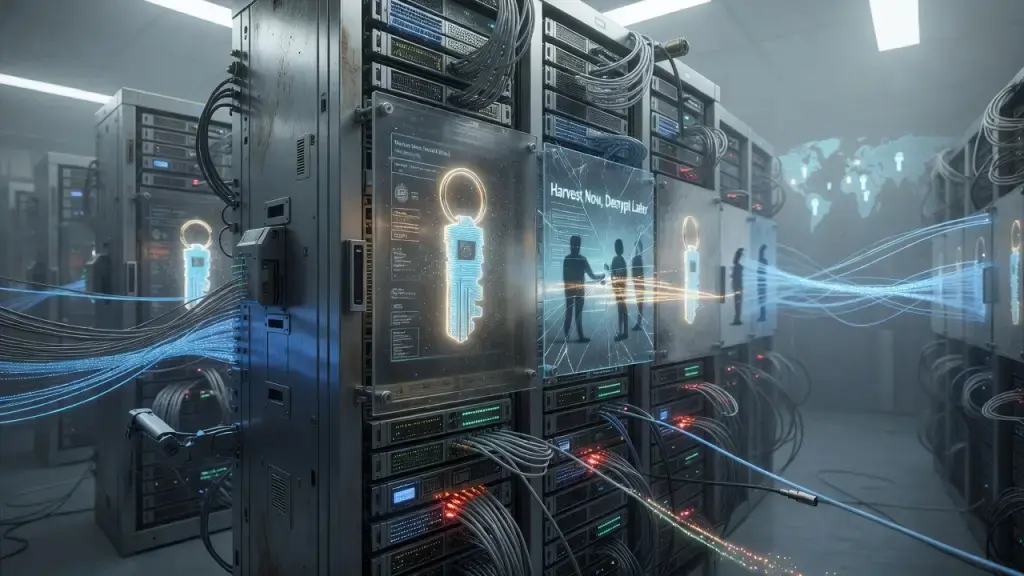
The redesign announced now is driven by a different threat: the eventual arrival of quantum computers capable of breaking current public-key cryptography. Adversaries do not need a working quantum computer today to benefit from one tomorrow. They can harvest encrypted traffic now and decrypt it later, once quantum capability matures - a strategy known as "Harvest Now, Decrypt Later." For data with long shelf lives, such as financial records, health information, or government communications, that risk is already live. Because no standardized, production-ready post-quantum version of attribute-based encryption exists yet, Cloudflare moved instead to Hybrid Public Key Encryption as defined in RFC 9180, combining the lattice-based ML-KEM-768 algorithm, standardized by NIST as FIPS 203, with the classical X25519 elliptic-curve method. This dual-layer approach means an attacker would need to break both systems simultaneously to compromise confidentiality, a deliberate hedge against uncertainty in either the classical or post-quantum method.
How the Key Hierarchy Enforces Borders
The system separates two things that used to travel together: encrypted data and the keys needed to read it. Wrapped private keys move freely across Cloudflare's edge through its Quicksilver key-value store, reaching servers anywhere. But the symmetric regional root keys required to actually unwrap those private keys never pass through that same global distribution system. They are issued only through a controlled service backed by on-premises HashiCorp Vault clusters, and only after an edge server proves its physical identity using a hardware Trusted Platform Module, verified against real data-center coordinates by Cloudflare's internal inventory system, Zinc.
Once authorized, a root key lives only in volatile memory, within the Linux kernel keyring, never touching a disk. A reboot or power cycle erases it automatically. If a server outside the approved region ever receives a request needing a key it was never issued, the system is built to fail closed: the request is simply dropped rather than risk decryption across an unauthorized border.
What Comes Next
The beta currently covers enterprise customers using Cloudflare One Zero Trust tools, including Magic WAN, Tunnel, and Gateway, with broader integration across Cloudflare's content delivery network expected before the 2027 general release. The approach reflects a wider shift underway across the security industry, as organizations handling regulated or long-lived sensitive data begin treating post-quantum migration not as a distant contingency but as infrastructure work that needs to start now, well before quantum decryption becomes practical.